Part 3: The Exam Room
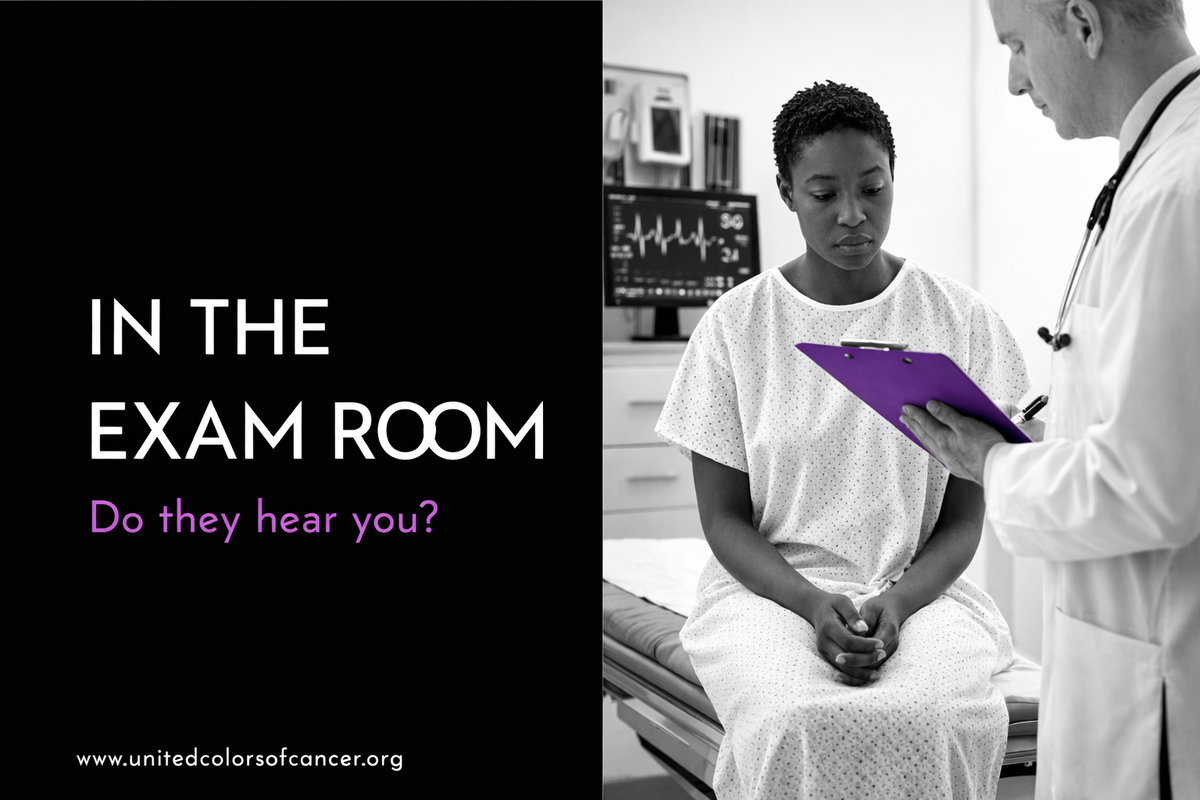
There is a particular kind of silence that lives in exam rooms.
It is not the peaceful kind.
It is the silence that follows after you describe your symptoms… and they are minimized.
The silence after you say, “Something isn’t right,” and the response is a raised eyebrow.
The silence where you begin recalibrating your own reality.
By the time many BIPOC patients reach an oncology clinic, we are already practiced in advocacy.
We know how to steady our voices.
How to make our pain legible.
How to present facts instead of feelings so we are not labeled dramatic.
But cancer strips you down. You do not have the luxury of performance.
And yet, bias does not disappear just because the diagnosis is serious.
It often becomes more dangerous.
There are moments that look small on paper.
A provider interrupting you mid sentence.
A symptom attributed to stress without investigation.
A tone that shifts when you ask too many questions.
Your name mispronounced repeatedly even after correction.
None of these incidents alone may feel catastrophic.
But layered together, especially during cancer treatment, they accumulate.
They make you second guess yourself.
They make you wonder whether your pain threshold is being assumed rather than assessed.
They make you cautious about speaking up again.
Research has shown that pain is undertreated in Black patients. That concerns are more likely to be dismissed. That implicit bias influences clinical decision making in subtle but measurable ways.
We feel those statistics in our bodies.
When you are already navigating chemotherapy side effects, surgical recovery, radiation fatigue, the last thing you need is to also manage whether you are being believed.
Cancer requires vulnerability.
Bias punishes it.
Sometimes the bias is not overt. It is structural.
Appointment times that do not account for multigenerational caregiving responsibilities.
Educational materials that assume health literacy without checking comprehension.
Support services that are not culturally responsive.
The system moves quickly. Efficiently.
But efficiency without equity can feel like erasure.
And here is the part we do not always say out loud.
When you have already experienced dismissal before diagnosis, the exam room becomes charged.
You remember being told nothing was wrong.
You remember being reassured too quickly.
You remember being underestimated.
So every interaction carries extra weight.
You are not just listening to the treatment plan.
You are scanning for respect.
Trust becomes fragile.
This is the emotional tax of navigating healthcare while BIPOC.
Not because every provider intends harm.
But because bias does not require intention to cause impact.
Microaggressions are called “micro,” but their cumulative effect is anything but small.
They erode confidence.
They increase anxiety.
They deepen isolation.
And when isolation enters the exam room, healing becomes harder.
Cancer is already a battle inside the body.
BIPOC patients should not have to fight to be heard in the very spaces designed to treat them.
In Part 4, we will step outside the hospital walls and into our communities to talk about another layer of isolation: the cultural expectations of strength, silence, and stigma that shape how we carry cancer.
Because the loneliness does not end when you leave the clinic.
Sometimes, it follows you home.