It Takes a Coalition to Change What Cancer Data Can See
Tomorrow, 1,000 Voices for Cancer Equity™ begins.
The survey may take one person 10–12 minutes to complete, but building a national listening movement requires years of trust, knowledge, community relationships, research experience, and advocacy.
No single organization holds all of that.
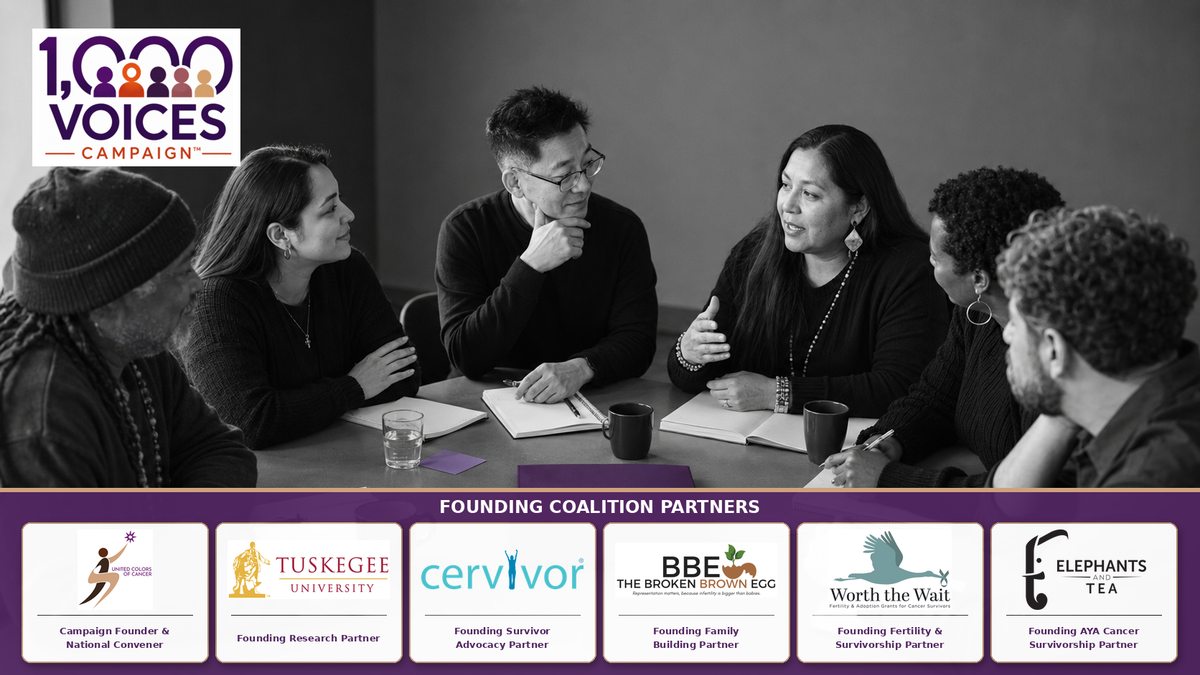
That is why the campaign is being built through a Founding Coalition—partners bringing different communities and different forms of expertise to one shared purpose: making the lived experiences of people affected by cancer visible in the data that shapes care.
Meet the Founding Coalition
United Colors of Cancer — Campaign Founder and National Convener
United Colors of Cancer created the campaign to center BIPOC and underserved cancer communities, connect lived experience with evidence, and ensure that data never loses sight of the people behind it.
Tuskegee University — Founding Research Partner
Tuskegee University brings a legacy of research, education, and service, helping strengthen the campaign’s approach to meaningful, credible data collection and analysis.
Cervivor — Founding Survivor Advocacy Partner
Cervivor brings the power of survivor leadership and a deep commitment to ensuring that people affected by cervical cancer are informed, supported, and heard.
The Broken Brown Egg — Founding Family Building Partner
The Broken Brown Egg brings essential expertise at the intersection of fertility, reproductive health, culture, and the experiences of communities too often left out of family-building conversations.
Worth the Wait — Founding Fertility and Survivorship Partner
Worth the Wait helps bring visibility to fertility preservation, family-building after cancer, and the long-term realities of survivorship.
Elephants and Tea — Founding AYA Cancer Survivorship Partner
Elephants and Tea brings community, storytelling, and the lived experiences of adolescents and young adults affected by cancer into the campaign’s national reach.
Why these perspectives belong together
Cancer equity is not one issue.
It includes who receives timely screening, who can access a specialist, who understands their options, who is offered a clinical trial, who can afford treatment, who receives fertility counseling, who has emotional support, and whose experience is believed.
It includes the patient, the survivor, the caregiver, the researcher, the advocate, and the community organization trusted enough to ask the difficult questions.
By working together, the coalition can reach beyond a single audience and listen across diagnoses, ages, cultures, geographies, and stages of the cancer experience.
Partnership must lead to participation
A coalition is not meaningful because of the number of logos on a page. It is meaningful when relationships help people participate, when partners carry community priorities into the work, and when the resulting insights return value to the people who shared them.
Our first benchmark goal is 1,000 responses by September 24, World Cancer Research Day. Reaching that goal will require more than awareness. It will require each partner, supporter, and participant to open a door for someone else.
Tomorrow, we ask you to add your voice—and then invite one other person to add theirs.
Together, we can build a clearer national picture of cancer access, treatment, financial toxicity, emotional wellbeing, survivorship, and trust.
Together, we can make data personal.
Together, we can make equity possible.
Meet the campaign: 1000voices.unitedcolorsofcancer.org