Patients. Survivors. Caregivers. There Is a Place for Your Voice.
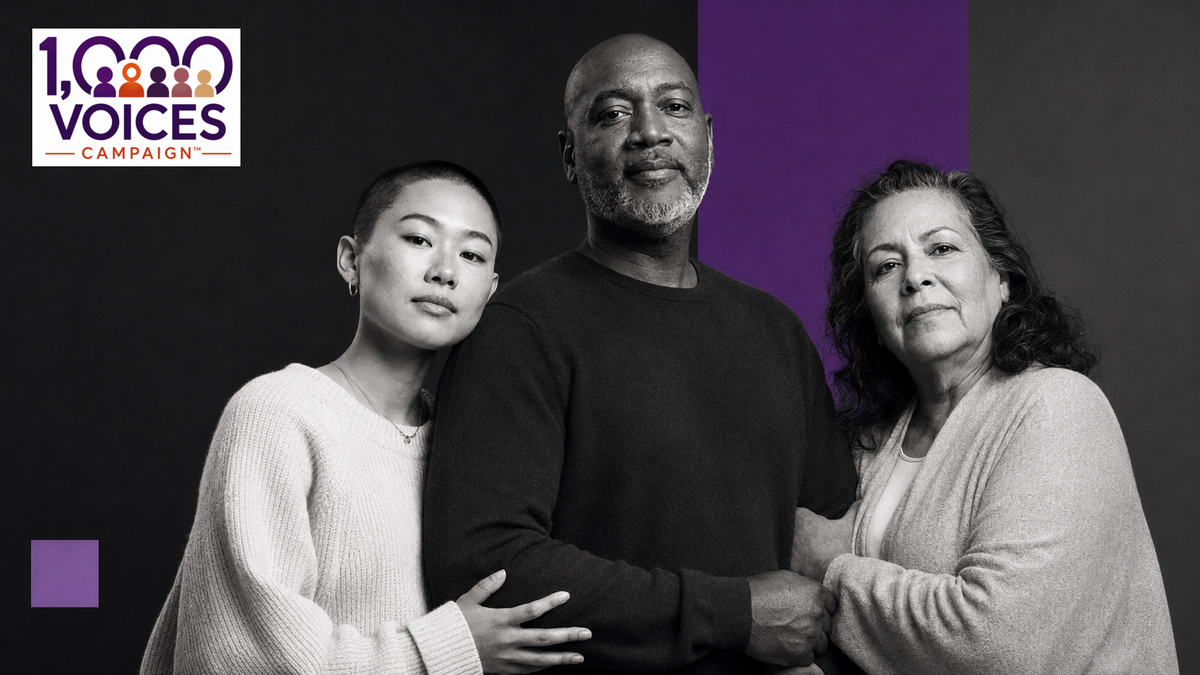
Cancer does not happen to one person in one way.
It can arrive as a new diagnosis, reshape years of survivorship, or change the life of the person providing rides, tracking medications, making meals, asking questions, and staying awake through the night.
Every one of those perspectives contains knowledge.
That is why 1,000 Voices for Cancer Equity™ is inviting patients, survivors, thrivers, and caregivers to take part in a national listening campaign launching August 1.
The campaign centers BIPOC experiences
Black, Latino, Asian American, Native Hawaiian and Pacific Islander, Indigenous, Middle Eastern, multiracial, and other communities of color continue to face unequal access, treatment, support, and outcomes across the cancer continuum.
Yet lived experiences from these communities are still too often underrepresented in the data used to shape cancer programs, research, and policy.
The 1,000 Voices campaign was created to help close that gap.
We are intentionally centering BIPOC voices so the realities of race, culture, language, income, geography, disability, family structure, and trust are not treated as side issues.
They are part of the cancer experience, and they belong in the evidence.
Everyone affected by cancer is welcome
Centering communities that have been overlooked does not require closing the door to others.
Everyone affected by cancer is welcome to complete the survey. Broader participation can help us understand both shared experiences and meaningful differences across communities.
You may see yourself in this campaign if you are:
- A person currently receiving cancer care.
- A survivor or thriver reflecting on treatment and life after treatment.
- A caregiver supporting a spouse, partner, parent, sibling, friend, or other loved one.
- Someone whose experience included barriers related to cost, transportation, insurance, communication, fertility, work, emotional health, or access to clinical trials.
- Someone who received excellent, respectful support and wants decision-makers to understand what worked.
The campaign needs more than stories of harm. It also needs examples of care that built trust, removed barriers, and helped people feel seen.
Why caregiver voices belong
Caregivers often see what no chart records.
They notice when a patient is too overwhelmed to process another instruction. They absorb the financial and emotional strain of missed work. They coordinate medications, transportation, meals, childcare, and communication across multiple providers.
They also experience cancer themselves—not in the same way as the patient, but in a way that deeply affects family wellbeing and the ability to sustain care.
If you have supported someone through cancer, your perspective matters.
You do not need the “perfect” story
There is no correct way to have experienced cancer, and there is no perfect response.
You do not need to remember every appointment. You do not need to speak for an entire community. You do not need to minimize what happened because someone else “had it worse.”
We are asking you to speak from your experience.
That is enough.
One voice—and one invitation
When the survey opens August 1, we ask you to do two things:
- Complete the 10–12 minute survey.
- Share it with one other patient, survivor, thriver, or caregiver.
One voice can uncover an experience. One thousand voices can reveal a pattern.
Explore the campaign: 1000voices.unitedcolorsofcancer.org