Survivorship Is More Than the End of Treatment
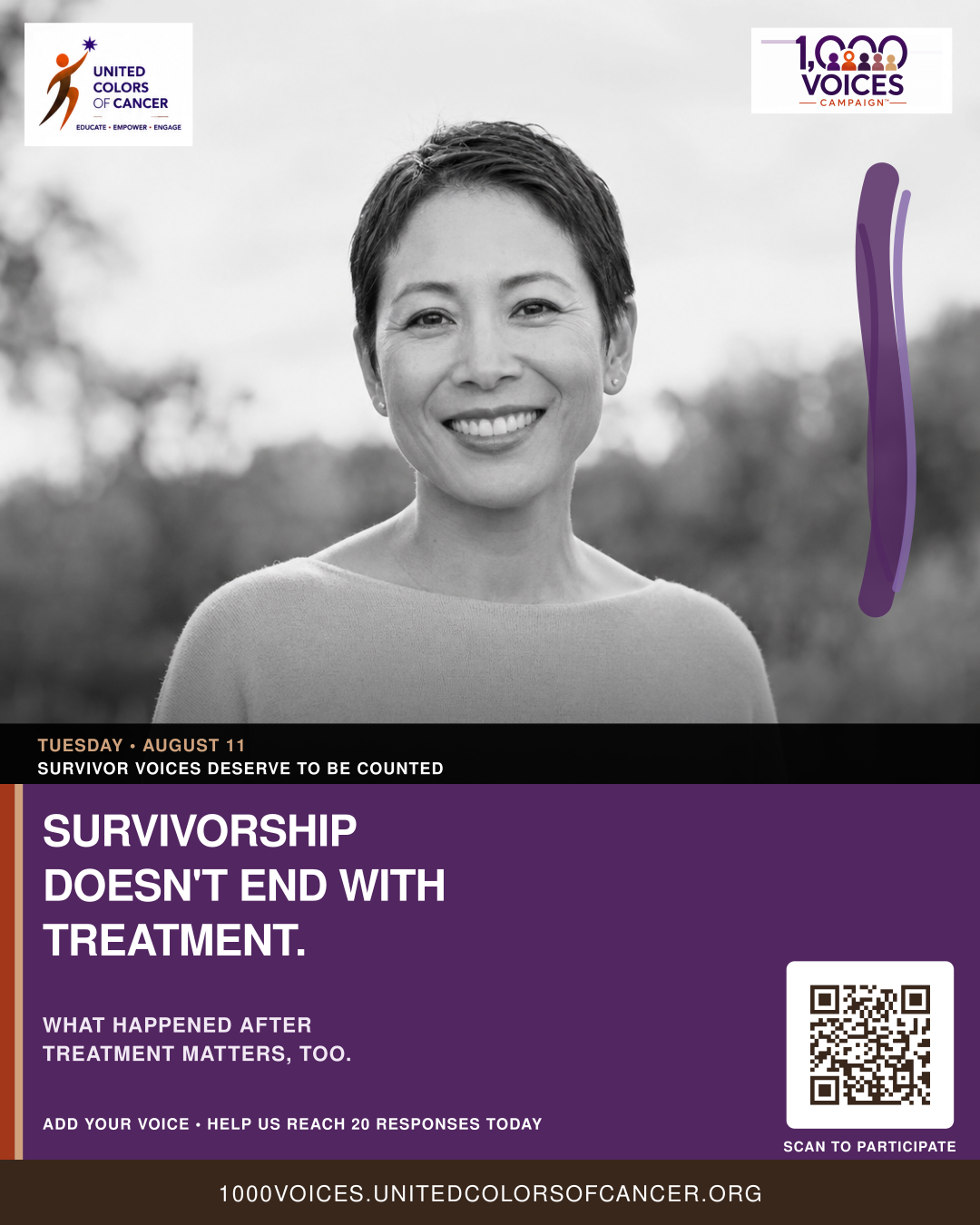
The end of treatment is often described as a finish line. For many cancer survivors, it is the beginning of another complicated chapter.
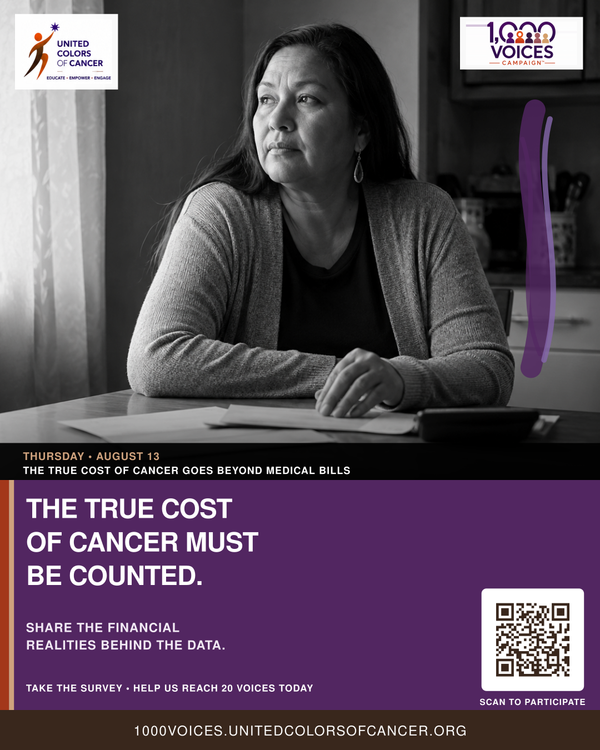
Survivorship can mean learning to live with ongoing symptoms, pain, fatigue, changes in appearance, or treatment side effects. It can mean fear before every follow-up appointment and uncertainty about recurrence. It may include medical debt, interrupted education or employment, changes in relationships, fertility concerns, or the challenge of rebuilding a future that cancer forced someone to imagine differently.
Some survivors feel surrounded by support during treatment, only to feel alone once appointments become less frequent. Others discover that the practical and emotional consequences of cancer continue long after family, friends, and coworkers expect life to return to “normal.”
These realities deserve more than quiet endurance. They deserve to be understood.
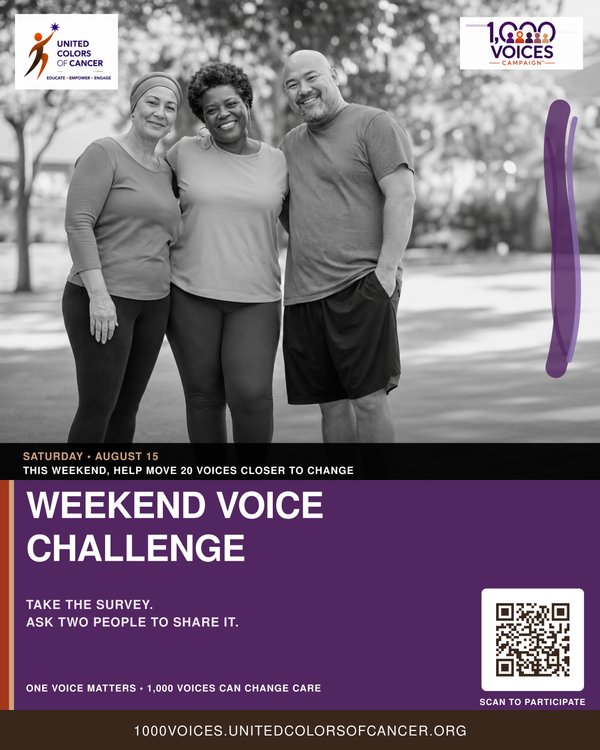
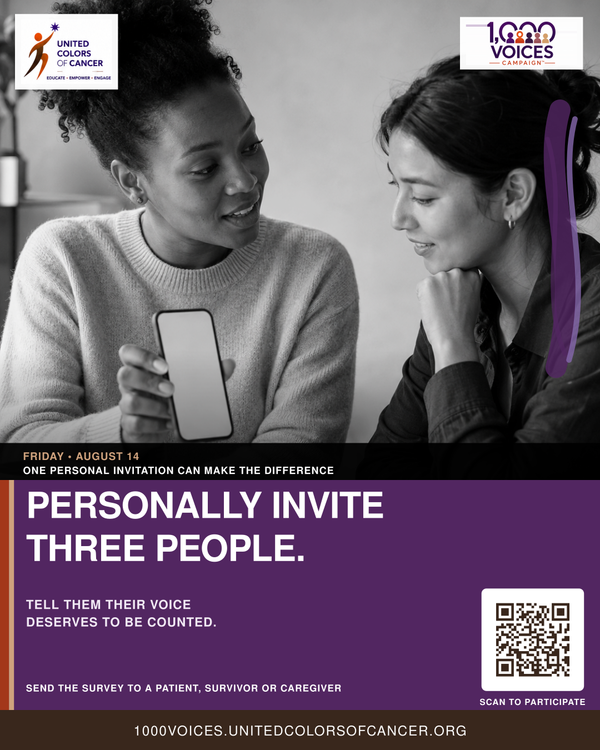
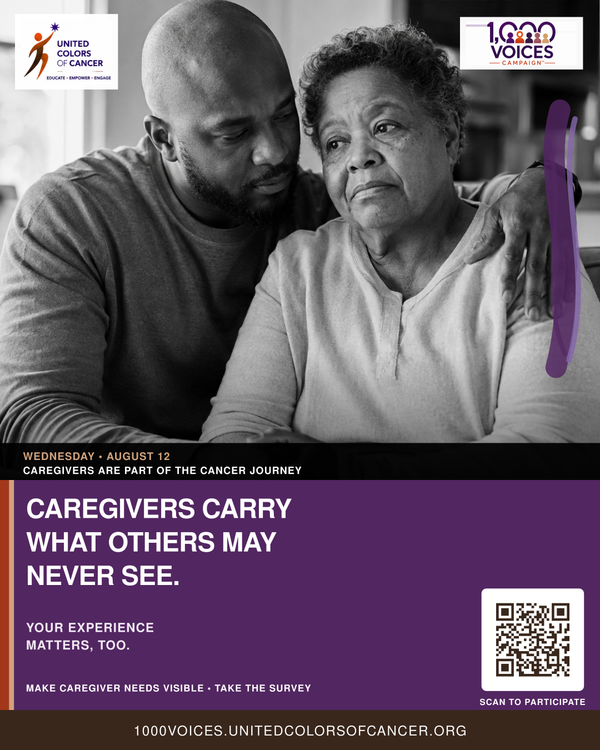
The 1,000 Voices for Cancer Equity™ Campaign invites adult cancer survivors to share the full story of life during and after cancer. Our anonymous 10–12-minute survey gathers information about treatment, access to care, emotional well-being, financial strain, support needs, and the lasting effects of the cancer journey.
We are especially committed to hearing from BIPOC and underserved survivors whose experiences have too often been absent from the data used to shape cancer programs and priorities. The survey is also open to eligible adults of every race and background, because a meaningful benchmark must reflect both shared challenges and important differences.
If you are a survivor, your experience matters whether treatment ended last month or many years ago. What happened afterward matters. What support you received—or did not receive—matters. What you want researchers, providers, and decision-makers to understand matters.
Please help us reach 20 completed surveys today. Add your voice at https://1000voices.unitedcolorsofcancer.org.
Your survivorship story is not simply what came after cancer. It is part of the evidence that can help shape better care, stronger support, and a more equitable future.