When Cancer Care Is Hard to Reach, the Barriers Belong in the Data
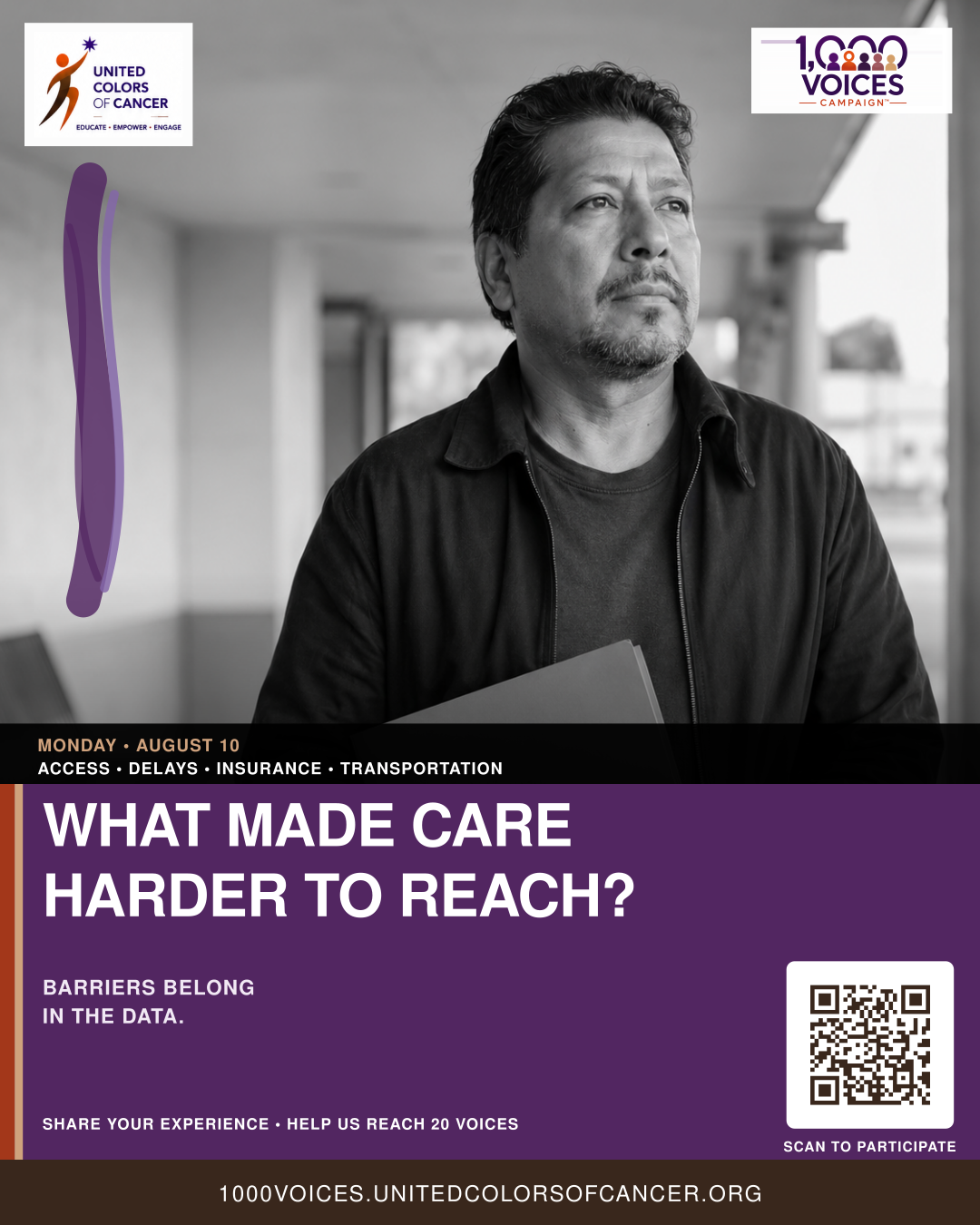
Getting cancer care should not depend on where someone lives, whether they have reliable transportation, how much time they can take away from work, or how hard they are willing to fight to be taken seriously.
Yet for many patients and families, the path to care is filled with barriers.
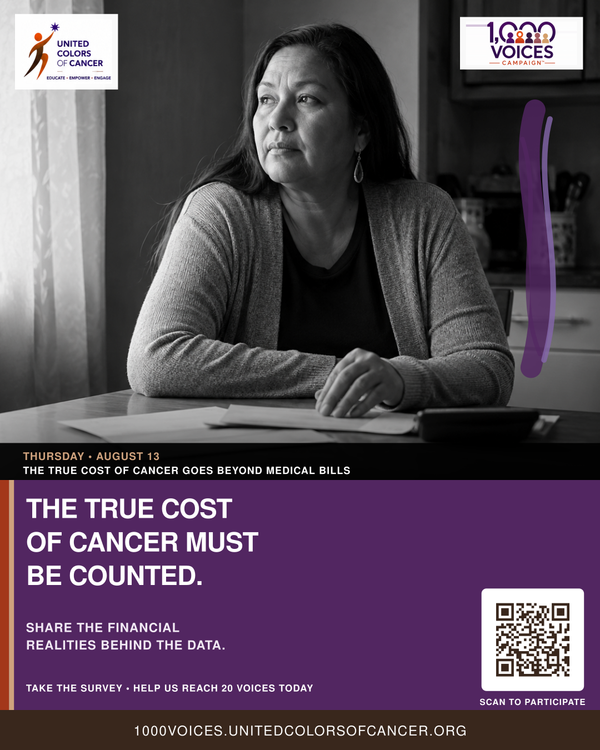
A symptom may be dismissed before a diagnosis is made. An insurance decision may delay a scan or treatment. A patient may travel hours to reach a specialist—or may not have access to one at all. Language, disability, cost, mistrust, discrimination, and a lack of culturally responsive care can add still more weight to an already overwhelming experience.
These are not side stories. They are part of the cancer experience, and they belong in the data.
The 1,000 Voices for Cancer Equity™ Campaign is listening for the realities that clinical outcomes alone cannot explain. Our anonymous survey asks adult cancer patients, survivors, and caregivers about access to care, treatment experiences, financial and emotional effects, support, and whether they felt seen and heard throughout the journey.
By gathering lived-experience data, we can begin to identify patterns: where care is difficult to reach, where support breaks down, and which communities face the greatest burden. That knowledge can help advocates, researchers, healthcare organizations, and policymakers ask better questions and build more responsive solutions.
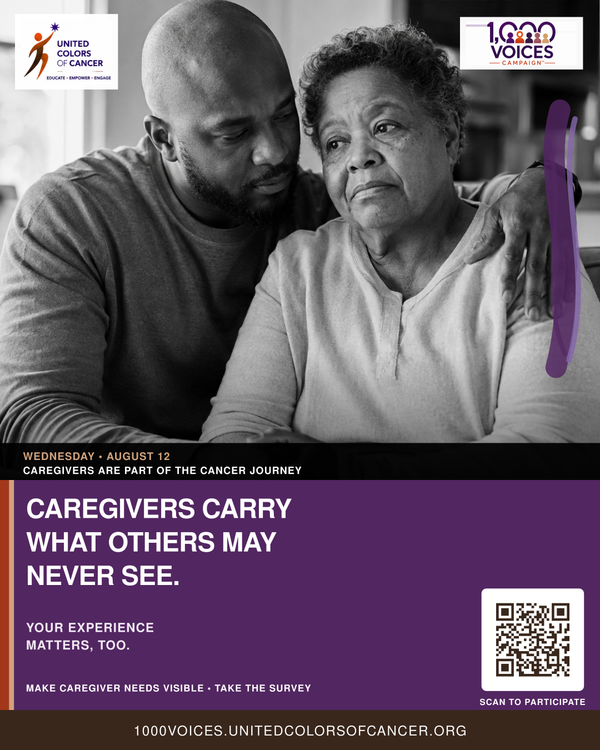
Although the campaign centers BIPOC and underserved communities, the survey is open to eligible adults of every race and background. Every completed survey adds detail to the picture—and every voice helps show where cancer care must do better.
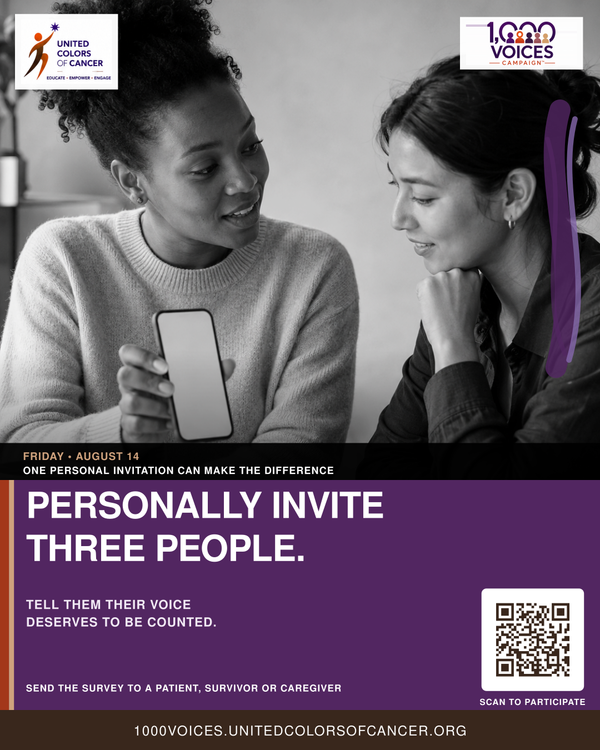
If you experienced a delay, obstacle, or moment when the system made cancer care harder, we invite you to share it. The survey takes approximately 10–12 minutes.
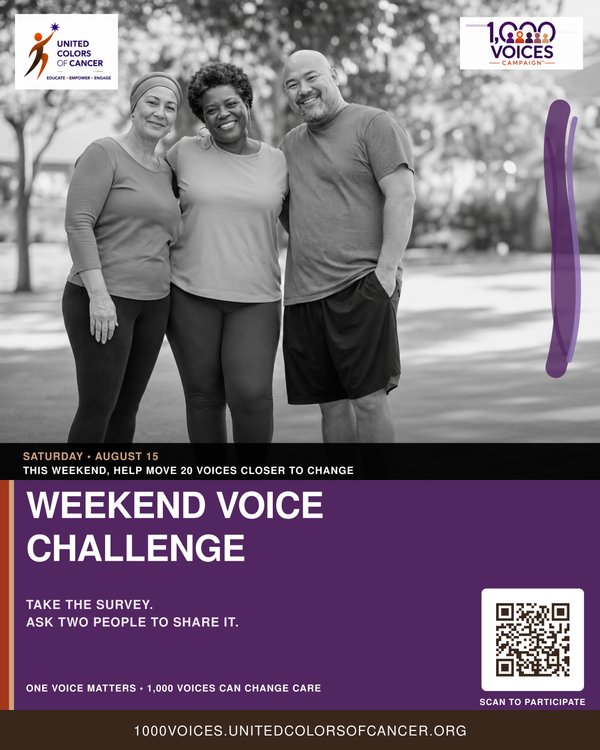
Help us reach today’s goal of 20 completed surveys at https://1000voices.unitedcolorsofcancer.org.
Your experience is not an exception to be forgotten. It is information that can help make the path easier for those who come next.