Part 4: Strength, Silence, and Stigma
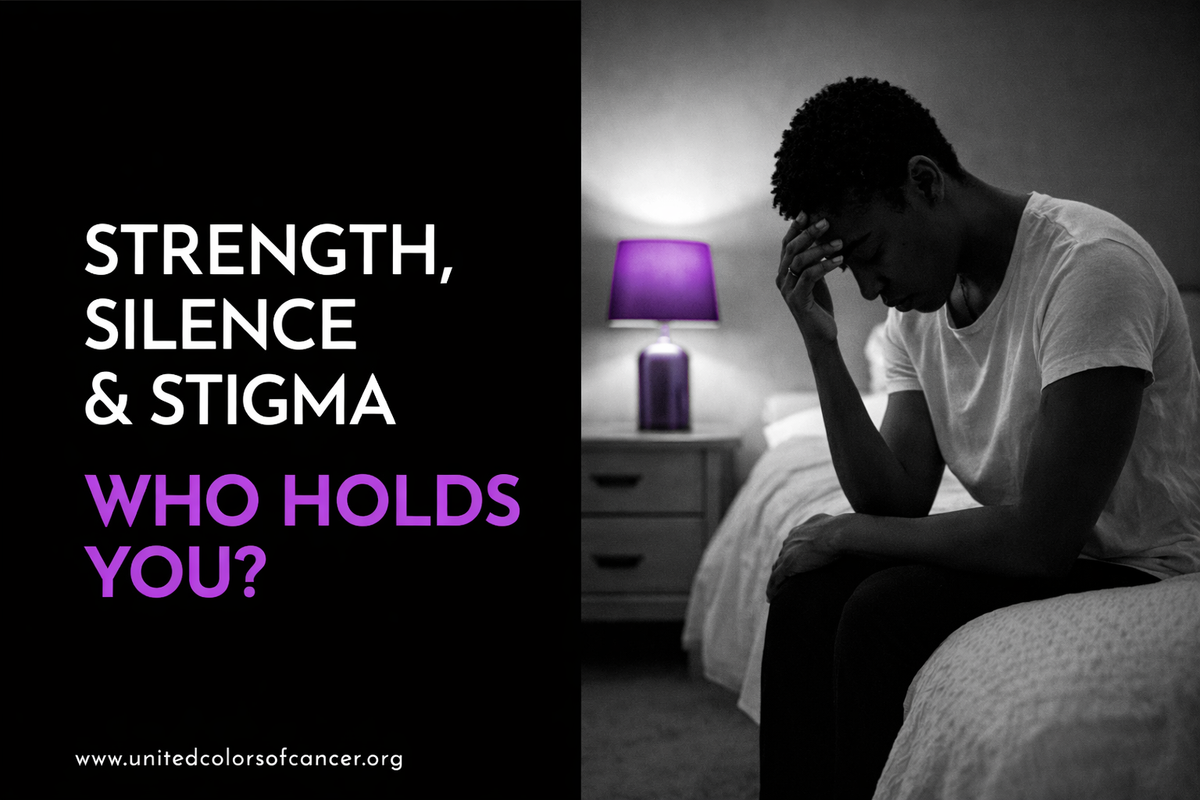
Cancer does not just enter a body.
It enters a family. A lineage. A culture.
And in many BIPOC communities, illness arrives in a room already shaped by expectation.
Be strong.
Do not complain.
Handle it.
Pray on it.
Push through.
Strength is our inheritance. It lives in our bones. It carried our ancestors through unthinkable things. It built families, movements, survival.
But when cancer arrives, that same strength can become a quiet burden.
I have seen it over and over.
The daughter translating medical jargon for her parents while still trying to process her own diagnosis.
The father downplaying side effects because he is “fine.”
The mother cooking dinner days after chemotherapy because caregiving does not pause.
The patient who whispers their fears to no one because vulnerability feels like weakness.
Outwardly, they look resilient.
Internally, they are exhausted.
In some communities, cancer is not discussed openly. It is referred to in lowered tones. It is spiritualized. It is feared as a sentence rather than a diagnosis.
Stigma can make people delay screenings. It can make families avoid the word entirely. It can isolate patients inside their own homes.
Silence becomes protection.
But silence also becomes loneliness.
There is also the myth of the “strong Black woman.”
The expectation of the tireless matriarch.
The cultural pride in endurance.
These identities are powerful.
But cancer requires rest. It requires softness. It requires asking for help.
And for many BIPOC patients, asking for help feels unnatural. Even unsafe.
So they carry it quietly.
They show up to appointments composed.
They reassure everyone else.
They minimize their fear.
And at night, when the house is still, the weight lands fully.
This is the emotional isolation that does not show up in medical charts.
The pressure to protect your family from worry.
The instinct to appear unshakeable.
The hesitation to seek mental health support because therapy is stigmatized.
The belief that you must endure in silence because others have endured worse.
Cancer does not only test the body.
It tests identity.
Who are you if you are not the strong one?
Who holds you when you are the one who has always held everyone else?
None of this means our communities lack love.
On the contrary, love is abundant.
But love without language for vulnerability can unintentionally deepen isolation.
When we do not create space to talk openly about cancer, about fear, about depression, about body changes, patients may feel alone even when surrounded by family.
Strength without space becomes suffocating.
Cancer is hard.
Cancer while BIPOC often means navigating not only systemic bias in healthcare, but cultural expectations at home.
It means learning how to honor ancestral resilience without being imprisoned by it.
It means redefining strength.
Sometimes strength is advocating in the exam room.
Sometimes strength is resting.
Sometimes strength is saying, “I am not okay.”
In Part 5, we will explore another layer of isolation: the burden of representation, the pressure many BIPOC patients feel to advocate, educate, and represent their entire community while still in active treatment.
Because surviving should be enough.
You should not also have to carry the movement alone.