Part 6: Finding Each Other
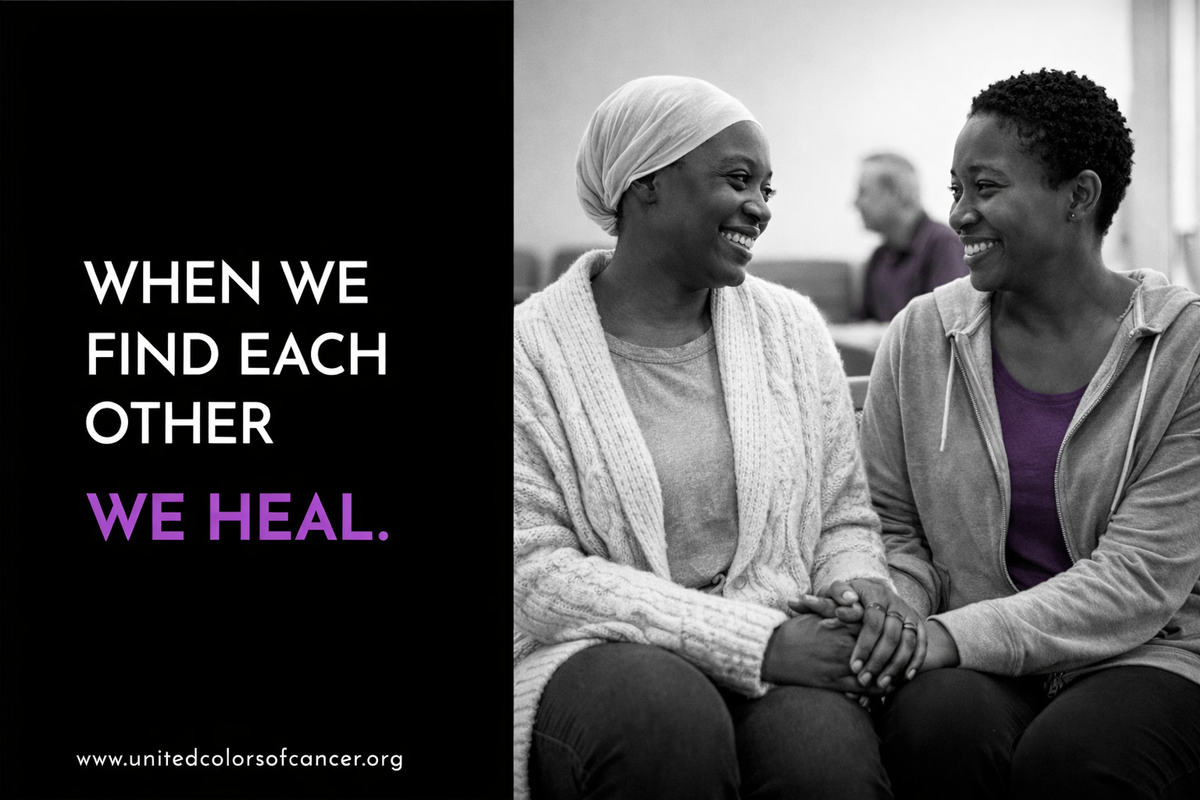
There is a moment when the loneliness cracks.
Not all at once. Not dramatically.
But enough to let light in.
It might happen in a waiting room.
A glance across the chairs. A shared look that says, without words, you too?
It might happen online.
Scrolling at 2am, unable to sleep, and finding someone who has said exactly what you have been holding inside your chest.
It might happen in a support group.
Hearing your story come out of someone else’s mouth.
And suddenly, you are not the only one in the room anymore.
Community does something medicine alone cannot.
It restores recognition.
Not just as a patient.
But as a whole person.
Your culture is understood without explanation.
Your fears are named without judgment.
Your questions are met with lived experience, not just clinical response.
There is a different kind of healing that happens when you do not have to translate yourself.
I have seen Black women talk openly about hair loss in ways no pamphlet ever addressed.
I have seen families gather in circles where language, faith, and culture are not barriers but bridges.
I have seen survivors share not just how they lived, but how they felt, the parts often edited out of mainstream narratives.
In those spaces, something shifts.
Isolation loosens its grip.
This is what happens when we find each other.
The weight does not disappear.
But it redistributes.
The questions that once felt heavy become shared conversations.
The fear that once felt private becomes collective understanding.
The silence begins to break.
Community does not erase inequity.
It does not fix biased systems overnight.
It does not fill every gap in research or representation.
But it does something just as powerful.
It reminds you that you are not invisible.
This is why spaces like United Colors of Cancer exist.
A place. A space.
Diverse as the universe.
Bridging the divide.
Not just to tell stories.
But to gather them.
To honor them.
To turn them into something that cannot be ignored.
Cancer is hard.
Cancer while BIPOC can be isolating in ways that are layered, structural, and deeply personal.
But isolation is not the end of the story.
Because when we find each other, we begin to change the narrative.
From invisible… to seen.
From alone… to connected.
From surviving quietly… to living out loud.
This series began with loneliness.
It ends with something else.
Not a perfect system. Not a finished solution.
But a beginning.
And sometimes, a beginning is everything.